Showing posts with label college football. Show all posts

Thursday, July 11, 2013

The Dog Days of Football


Early summer is hard on football players.

Quick and dirty count as of two days ago—15 arrests of professional football players this summer. 30 stories of arrests or players kicked off of college football teams this summer. The count rises each day. The incidents usually involve drugs or alcohol linked to assaults, mayhem or driving incidents. It happens every early summer to football players. The predictable articles and hue and cry will arise about how violent football players are, especially given the Aaron Hernandez murder charges. But this occurs each year at this time of year. It has its own rhythm tied to the dog days of summer. Why?
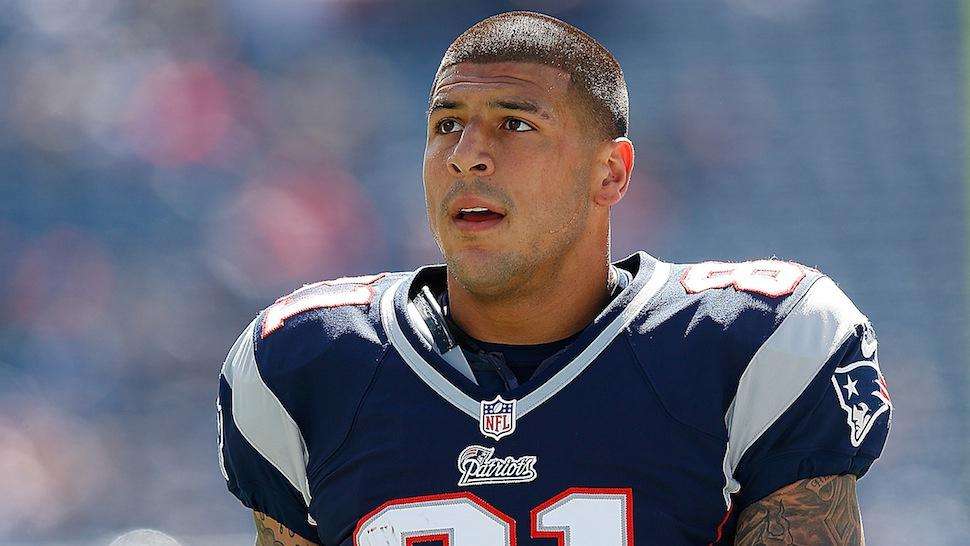

Football teams groom and recruit violent young men or men capable of angry controlled violence to play this game. The successful ones often live in a bubble that tends to protect them from too serious consequences for off field squabbles. At the same time, these young men, often from angry and violent backgrounds, learn that their bellicosity and strength can be channeled into “productive” activities. They learn to hit, smash, run, block, crunch, power through on the football field and get rewarded. They learn to endure pain and inflict pain as a path to glory and a future.

The point to remember here is that these young men ages 18-25. Young men do stupid violent things all the time, hopefully without too much hard being done.  Football players are rewarded for their belligerence and remain capable of calling upon violent action and exploding into controlled force at any time. Some escape to football from cultures where violence surrounds them and learning to be tactically violent is a survival tool. Others come to football with a huge residue of anger. Football players possess in abundance normal male fueled hostility and culturally fueled anger.


All football players possess the capacity for serious disorderly violence if the discipline and team ethos that shapes and directs it is not around. In this they are not so different from many other males their age—left without purpose or authority or structure; they get into trouble. College and professional football coaches are not noted for their gentleness, the culture and structure surrounding teams needed to nurture, control and direct the capacity to inflict and endure pain takes constant authority and strength.

Early summer poses multiple problems for college and professional football players. Many are too young to be married. Often they have little home or not much home to go to. Few of them have summer jobs to fill their day and exhaust them. Free time, boredom and lots of roiling energy—not a good combination.

More importantly during the early summer the football players are unmoored unless anchored in a family. Their peers doe not surround them with norms and goals that can support directing anger and tempers. Those peers also give them a culture of banter and bashing that permits lots of the competitive anger and violence to find safe outlets. Even safer outlets occur during practice and team condition drills or working one on one with trainers and coaches. During early summers college players are free—they may be in class, but are not imbedded in team or coaching authorities.

Likewise professional athletes who are not married are free with lots of money and status to wander and look for ways to get into trouble. They are not surrounded by teammates or coaches or minders.

On the other hand unlimited opportunities for fun and mischief beckon them. Lots of folks, friends, wannbes or hanger-ons will urge them on into trouble or not great situations at bars and clubs and parties. A few from the old neighborhood have other more twisted or complex agendas offering the fun and challenge and initiation of crime to their “old friends.”

Strong coaches, team rules and peer culture give them homes where they often had none. The stress and demands of forty to sixty hours a week of practice, conditioning and travel and playing dominate their times. Players often do not have the time or energy to get into serious trouble during the season. When it happens, it almost always happens at an after game party. These are the safe times that structure the matrix to grow as players and if done right as self-controlled young men.

It happens every summer. The arrests and charges for drinking related crimes or mayhem or assault will rise until camps begin. The discipline of teammates, coaches and sheer physical and mental work of being a modern football player will tap out or direct the anger and aggression. The common purpose of forming a team and winning championships will give purpose and meaning that undergird the discipline for the belligerence that so many can call upon.

With luck players will make it through the summer intact without too much damage to themselves or others. With luck, help and maturity, they will grow through the mess and temptations of early summer and end up as mature good men.

Friday, December 21, 2012

End of the Big East—Birth of an Old Fashioned Conference


Much like Argentina, no one should cry for the end of the Big East, and certainly no one should romanticize it. Villanova, Marquette, Georgetown, St. John's, Providence, Seton Hall and DePaul, all urban undergraduate focused non football schools, are leaving the conference. This spells the end of a long painful death spiral. (As usual Pete Thamel does a fine job examing the process) In 1980 the Big East was carved out as the first completely commercial conference. It was created solely to stake out a market, produce a brand across disparate schools and increase the probability of getting schools into the NCAA basketball tournament. Born in commerce, it dies in commerce. One side effect may be the creation of a new conference that actually resembles what conferences were once upon a time.

From 1980 to 2005 the Big East launched an unparalleled period of success and visibility for its schools in basketball. Traditional eastern powers like Villanova, Georgetown, Syracuse and Providence joined with newcomer powers like Connecticut and Pittsburgh to generate a depth of competition and market visibility. The Big East branded a distinct form of physical and tough basketball. Each year 6-8 teams got into the NCAA tournament, and their coaches spread the gospel of brutal Big East basketball across the land. The expansion of the NCAA tournament into a national liturgical event gained immense stature for its schools. Connecticut and Syracuse with their superstar coaches took home a series of titles

This basketball success could not withstand the pressures unleashed by the economic dominance of football over the last twenty years. College football and its vast popularity has reaped huge media money, and power conferences have reaped gigantic windfalls from conference contracts. These contracts at the five elite BCS conferences garner 15 to 19 million dollars a year for schools.

College football drives the profit. The Big East was never a football conference. Largely because no one else even looked plausible, the Big East snuck into the BCS championship pool as much as a sop to the mid major conferences as any football merit of the conference. Each year its BCS team got humiliated by real football powers in a random BCS bowl game. Heck, TCU quit the conference before it ever joined the conference.

A media consultant once told me, “aside from the tournament, basketball is filler for slots. It has bulk but not profits.”  The dominance of football and the migration of real money to the big five left the Big East vulnerable in two ways. First, it would never be a serious football conference. At random times Boston College, Syracuse, Pittsburgh, West Virginia or Cincinnati might emerge for a year a two with a great player or coach. But the coach would inevitably move on, and the player would graduate. When Boston College, Miami and especially Virginia Tech jumped to the ACC, this portended the end of any hope of football elite status. Second, all the Big East schools were hemorrhaging money with football, and the inability of the conference to ever gain elite football status doomed them to perpetual money losing.

This still-born football status coupled with huge monetary losses from football meant any half way decent football schools looked for other conferences that could gain them more money and status. It also meant that the basketball only schools found themselves mooted by the desperate and futile search for football credibility. This lead to increasingly desperate overtures to Boise State, San Diego State, Tulane or whomever could bring a shred of credibility to the conference.

In addition unlike the ACC or Big 10, the Big East never had any serious academic credibility. Schools such as Syracuse or Pittsburgh or Louisville would jump to the ACC which offered more money, stability and more academic stature. Each defection lead to more panicked search for lower quality football schools to fill the void. The Big East could no longer fulfill the requirements of a  successful modern conference.

The paradox here lies with the non-football schools. Most of them were city based religious colleges colleges. They all remained mission driven undergraduate institutions. None of them had huge endowments, but all had fierce and loyal alumni based in urban areas. Many had added strong professional schools and grown into universities, but their core identity remains mission driven undergraduate education. None of them had added football, and the very few who did like Boston College struggled with indifferences and periodic success.

These urban, mission driven religious undergraduate schools had great markets in big eastern cities and had strong traditional rivalries among New York, Providence, Boston, New Jersey or Philadelphia. Many of these rivalries echoed back fifty years when schools clustered in small boxes to play intense rivalries. They all shared plausible commitments to serious undergraduate education with a values based foundation. Sister schools like Xavier, St. Louis, Creighton lived in different conferences. They now loom along with an interesting and similar newcomer like Butler as possible new allies for a reconstituted conference who would share a scale and values dimension.

This basketball driven conference would not make huge amounts of money, granted. The new conference, however, would connect strong rivalries among strong markets with strong committed undergraduate focused universities and colleges. It would also lead to strong filled auditoriums. The conference would post strong strength of schedule and high RPI ratings for the tournament. Travel for the Olympic sports would be manageable. It would have a strong brand, solid recruiting base, good coaches and regularly get strong exposure at tournament time.

More interestingly the conference schools would not face the economic hemorrhaging of football. Football is a two-edge sword. The vast majority of football schools lose serous money, and the losses require internal subsidies. Even with the new mega conference contracts, schools continue to lose money as they must pay rising salaries, build up facilities and pay back internal subsidies to schools. Freeing themselves from the football schools permits these undergraduate focused universities to live within their means, still gain visibility through NCAA tournament runs and imbed themselves in their communities as they once did. It still gives alumni a focal point of identity.

The demise of the first purely commercial conference creates a paradox. Who knows, maybe a new conference might emerge that shares similar undergraduate based values, has relatively contiguous markets with traditional rivalries and does not lose huge amounts of money each year chasing the dream of football largesse. It would be a conference based upon affinity and proximity. Now wouldn’t that be a change?


Big East Exodus


SchoolLeftFor
Miami2004ACC
Virginia Tech2004ACC
Boston College2005ACC
TCU †2011Big 12
West Virginia2012Big 12
Syracuse2013ACC
Pittsburgh2013ACC
Louisville2014ACC
Rutgers2014Big Ten
Notre Dame2015ACC
DePaul*undetermined
Georgetown*undetermined
Marquette*undetermined
Providence*undetermined
St. John's*undetermined
Seton Hall*undetermined
Villanova*undetermined