Showing posts with label Tressel. Show all posts

Sunday, April 8, 2012

Why Do Coaches Lie?

“Own it!”
“No excuses!”
“Take responsibility for yourself?”
“You can only control one thing, yourself!”

Coaches scream the words and as they stalk the sidelines and tower over practices. They engrave them in the minds of their players. These words define the credo of every good coach who works with young athletes.

With their visibility, celebrity and stature coaches are elevated into role models and moral arbiters beyond the field of play. They even author books like Sean Payton of the New Orleans’ Saints with Home Team. Jim Tressel at Ohio State authored a passel of motivational and leadership books such as The Winners Manuel: For the Game of Life. Coaches become spokesman for values and leadership.

For good coaches it begins with coaching a person to accept responsibility for him or herself. A strong coach builds the foundation of honest self-assessment and growth. If a person does not take responsibility for actions, she or he will never acknowledge problems or failures, a player will never see the need to change and learn. Players who do not take responsibility for themselves never grow.

Honesty grounds responsibility. A person has to be honest with him or herself to have a chance to acknowledge mistakes, learn what they are doing wrong and practice getting it right.

A good coach knows this and inculcates it in their style. Respect for a sport, respect for a person and the passion to help a player get better and a team to succeed require transparent honesty—sometimes hard even harsh honesty to get through to an athlete who needs to get over their ego and start developing as a person and player.

Honest responsibility drives a coach to x-rays the player’s performance to identify strengths and weaknesses and then help an individual get better. As important, a good coach self-critiques. A good coach is brutally honest with themselves and takes responsibility for their mistakes—my bad—as team slang might say.

This honest self-criticism and taking responsibility leads coaches to spend hours on tape and break down their own past performance as well as that of players and opponents.

Good coaches model the responsibility they so passionately preach.
So why do they lie when they get into trouble?

This year bursts with examples. Jim Tressel, the successful and devout football coach at Ohio State, lied to his boss and then the NCAA to “protect” his all star players and protect a bowl season. When he found out his own players had violated NCAA regulations on a regular basis, he should have accepted responsibility and demanded they accept responsibility. Instead he hid the corruption, then he lied about to everyone.

Sean Payton tacitly and probably not so tacitly condoned creating a culture that encouraged and rewarded his defensive team to deliberately set out to maim, injure and damage the brain functioning of opposing players. Payton clearly benefits from a culture of immoral and illegal actions that violate the moral core of the sport. He ignores it with culpable negligence and rewards the coaches who lead it. When it comes out or when he knew, he should have stopped it immediately. He should have changed the behavior of his coaches and acted to inform and protect his bosses. Instead when it leaks, Sean Peyton misrepresents it to his bosses initially and then directly lies to the Commissioner of the NFL.

Now Bobby Petrino the coach of Arkansas, a bluff motorcycle riding good old coach, has an fairly serious accident riding his hog, sorry about the bad pun for all you razorback fans. Blood splatters with broken bones and fractured vertebrae in his neck, he snuck away from the accident and got his body guard to get him to the hospital. He told a bystander not to call 911 and cooperated with the police. He told everyone that he was riding alone after a day with his wife. Twice he made it clear in public environments. Turns out he had a passenger, a 25 year old stunning blond ex-volleyball player whom he had hired the week before. Oops. Turns out he was having an “inappropriate relationships” with her—read betraying his wife and family and having an affair.

Did Petrino accept responsibility for the accident, yes, sort of, but he did his best to cover-up with lies the unfortunate fact that he was joyriding with a girlfriend half his age. He lied to the press, his boss and his team and his wife.
These are just three examples this year. What befuddles me is how these men who so passionately preach and demand accountability and responsibility from their players abandon all these principles when it comes to them.

Tressel lied to protect his team, his record and himself. Payton lied to protect his team but also cover his own negligence and to spite a type of control over safety that he despised as weak. Petrino lies to protect his reputation protect his job and in theory protect his family from the embarrassment.

All three coaches live and die by honest demanding responsibility. All three fail when it comes to demanding it of themselves.

In this they join politicians, business leaders, clergy and many folks in power who default to lies and denial rather than taking responsibility. Unfortunately we have heard the story before and will hear it again.

What matters here is not that the coaches screwed up, we all do. What matters is that they lied and tried to shirk responsibility violating their own basic moral code.

We make coaches bigger than life in the press and in our own worship of them. We turn them into moral and leadership guides for players and fans and even buy their books. I even taught a chapter from Tressel. The media, ownership, colleges and we all collaborate in this collective conceit.
Turns out they are not heroes nor necessarily heroic. Turns out they work better on the field than in real life. Folks who get used to power and adulation begin to believe they are immune to the rules. They get so protected, even with their own body guards, and they are so successful in one area of life, that they begin to feel entitled in other areas of life. They take risks but most importantly they never believe they will be caught. At worse, they are so used to being right, they do not notice they are dong wrong. They are so used to being protected that they assume either their own power or their own network will protect them even against the truth.

I could cite hundreds examples of failed liars, but none of them seem to learn from each other. Payton did not learn from Tressel and Petrino did not learn from either.

Turns out they lie to protect themselves. They lie to evade or hide responsibility for their own moral failings—the very stance they condemn in their players

Turns out they are mortals after all, a fact they often forget in their celebrity.

Coaches should remember that for good or bad, we and their athletes take what they say seriously, too bad they don't.

These three will be back because they can win games, but if I simply cannot take them or their words seriously, how can their players?


Monday, May 2, 2011

Lying in College Sports Violates Heart of University

The NCAA indicted Ohio State and coach Jim Tressel for multiple counts of lying and hiding violations. The NCAA concludes that Tressel’s lying conveniently permitted Ohio State to play ineligible players on the way to a 12-1 season. This means Ohio State gained a significant illegal competitive advantage similar to if it had been covering up academic ineligibility of players. If Ohio State is guilty, the NCAA could justly vacate Ohio State's record and season. I will leave the NCAA to pursue its justice, but want to continue my earlier discussion of why lying is so deeply wrong in sports and especially college sport.

If we leave aside Ohio State's President Gordon Gee’s concern about being fired by his football coach, if we leave aside Ohio State’s absurd wrist slap on Tressel for his lying, we need to remember that honesty and truth telling lie at the heart of the university's mission. We teach honesty as a bedrock virtue to professors, students and scholarship. No university is perfect, but honesty remains a bedrock virtue in the pursuit of knowledge. Our coaches are expected to teach honesty to their student athletes.

The expression "to live a lie" hints at the fundamental moral problem with lying, it violates a person's integrity. The person pretends to be a person other than the person they are. A person lives a "secret" life that he or she hides from others. “Living a lie" besmirches all the accomplishments because they are not really earned; they are misbegotten by cheating.

Lying in sports, as Tressel, Bruce Pearl, Marion Jones or Barry Bonds demonstrate, not only perpetuates a living lie, it encourages others to lie. Lying is like Gresham’s law in sport; lying drives out honesty. As more competitors win by cheating and lying about it, the honest competitors lose. They not only lose races or game, they lose their jobs and livelihood. The good ones are tempted to cheat by the success of the liars and cheaters. The norm and excuse become "everyone does it." When the honest ones defect to lying, the norms of the sport reach a tipping point where cheating and lying become the new norm, much like the dark mirror world of AAU basketball. Little by little the moral quality of the entire sport declines as happened to baseball when more and more false sluggers living a collective lie made baseball the sport of drug enhanced behemoths.

Lying starts at the top. In baseball it meant coaches simply looked the other way and owners handed out high salaries to cheaters they all knew were cheating. In college sports lying coaches who win get rewarded with contracts or hired by other schools. Sport like all life can be subject to denial. When we live in denial, we have all the evidence before us, but we do not put the dots together; we do not push to ask the harder questions behind the surface. Denial is not about not knowing, it is about having the information but refusing to acknowledge it and make sense of it, much like a parent sees all the symptoms that their child is abusing drugs, but never puts it all together. The USC athletic department specialized in this approach for years. Gee seems to be working on the same principle.

In college sports, this means that the coaches teach their student athletes, let me repeat, they teach their students (athletes) that lying is OK, not only OK but it is the way to get ahead. Tressel's players listened to his sermons on integrity and virtue, they might even read his books (remember I taught one of his book chapters)  but they KNEW HE LIED. The players learn about how hypocrisy is rewarded and lying to win is condoned.

A couple years ago I watched a coach at UW ask a player to lie. The player had injured himself, and the coach convinced the 20 year old to lie to the media and everyone else about how the injury occurred. This was an obscene moral act for a university official to suborn a young player under their charge to lie. Tressel acted by omission, the UW coach by commission, but both taught their players that the man who controlled their destiny and who preached virtue to them, believed in lying when they needed to.

The NCAA needs to act aggressively against Tressel and Ohio State's twitterpated  President. The only way to protect honesty as a value and integrity as a lived reality is to draw powerful and strongly enforced boundaries around lying. Transgressions must be punished, wins must be vacated and coaches should lose their jobs. If the boundary is not clear and enforced, the NCAA simply encourages other coaches to defect in order to keep their jobs. If the boundary is not clear, the University collaborates in teaching its students and its public that truth only matters if it does not get in the way of winning.

Friday, April 22, 2011

Why Lying Matters in Athletics

Barry Bonds was convicted of something, finally. More importantly he was convicted of lying; in this case to the government. More than a few commentators have yawned, so what? The public lost interest a long time ago, and the Giants fans seem undeterred from hero worship of a cheating performance. So be it. But I want to emphasize that Bonds was convicted, as he should have been, and he was convicted for lying.

This is important. Lying is wrong, especially in rule governed activities like sports. The whole point of athletic competition depends upon abiding by the rules so that each player participates on an equal playing field participating in a transparent way under the same standards. This clearness ensures victory is earned by talent, skill, hard work and smarts. Honest athletic competition depends upon transparency to honor its results and align results with commitment.

Cheating, not abiding by the same rules as everyone else, means that a player does not “win” or “earn” a victory. They steal a victory by unfair means. The entire moral edifice of sports as an activity worthy of our honor and respect depends upon this and transparency and fairness.

We call players and coaches to account when they cheat and when they do not abide by the rules. This accountability depends upon honesty and it depends upon sports policing itself to ensure that people abide by the same rules everyone agrees to.

Lying is wrong. Lying undercuts this entire structure of accountability and transparency of sport competition. The coach or player hides and denies that he or she committed a wrong. They lie to escape accountability and hide the ethically flawed nature of their accomplishments. When Bonds lied to the grand jury bout his use of substances—the jury could not decide if they were banned PEDS—he broke the circle of accountability and transparency. So all his victories and records are suspect because they were probably gained by cheating.

Bonds’ convictions for lying to the government probably sets the stage for a similar fate for Roger Clemens who also chose to lie not just to fans and fellow players and managers but to the government. Lying to the government entails some very serious problems for the entire justice system, so perjury is a very serious crime. The ability of the state to have any chance at solving problems and trials justly depends upon truth telling.

The Bonds’ conviction and affirmation that lying is wrong also should be needed reminder to intercollegiate sports.

At universities honesty is one of the most fundamental values because the pursuit of knowledge and inquiry depend upon truth telling and not lying. Liars in academia are discredited and professors can be sanctioned. So the actions of the last two months have been especially disturbing.

Jim Tressel found out that his players had violated NCAA rules. The knowledge was sent to him by a concerned booster to protect the program. As an NCAA coach Tressel had a very clear legal obligation to report these violations to his athletic director and the NCAA. The NCAA requires self-reporting of violations by coaches, and its entire collegial association depends upon this.

Tressel chose not to tell his athletic director or the NCAA. He cited the paper-thin reason that he did not want to “thwart” an investigation that he knew nothing about. It just happens that not telling the NCAA also kept five players from being declared ineligible and enabled him to complete a 12-1 season.

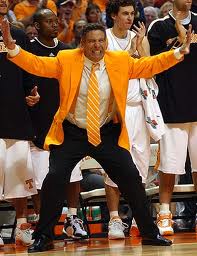
At the same time Bruce Pearl was finally fired by Tennessee after directly lying to his athletic director, President and the NCAA. Unlike Tressel who lied by omission, Pearl just lied outright, and then did it again. In a remarkable step the SEC (this tells how outlandish this was) stepped in and suspended him for eight league games after Tennessee slapped his hand. He was finally fired but only after his team did not go far enough in the NCAA tournament. Tressel of course will continue to coach.

Once upon a time in an NCAA long ago and far away, lying not just got you fired but not hired. Now teams regularly hire proven liars like Rick Neuheisel at UCLA or Kelvin Sampson at Indiana. So the world of the university where truth seeking is honored above all and lying remains a cardinal sin has made its peace with coaches who lie, coaches who win that is.

Thank God an athlete lied and actually got convicted! This reminds us that honesty and transparency lie at the foundation of sports; wish universities would remember that.