Showing posts with label violence. Show all posts

Thursday, July 11, 2013

The Dog Days of Football


Early summer is hard on football players.

Quick and dirty count as of two days ago—15 arrests of professional football players this summer. 30 stories of arrests or players kicked off of college football teams this summer. The count rises each day. The incidents usually involve drugs or alcohol linked to assaults, mayhem or driving incidents. It happens every early summer to football players. The predictable articles and hue and cry will arise about how violent football players are, especially given the Aaron Hernandez murder charges. But this occurs each year at this time of year. It has its own rhythm tied to the dog days of summer. Why?
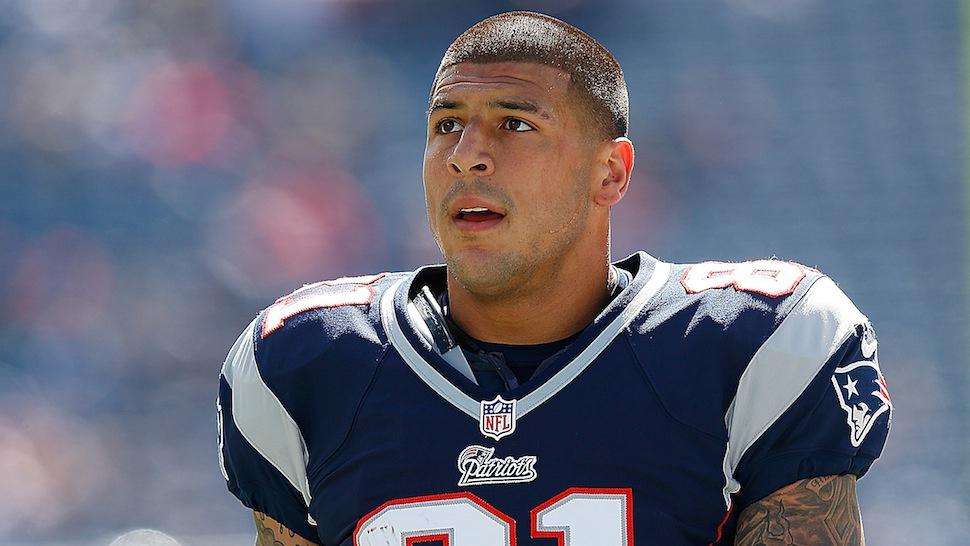

Football teams groom and recruit violent young men or men capable of angry controlled violence to play this game. The successful ones often live in a bubble that tends to protect them from too serious consequences for off field squabbles. At the same time, these young men, often from angry and violent backgrounds, learn that their bellicosity and strength can be channeled into “productive” activities. They learn to hit, smash, run, block, crunch, power through on the football field and get rewarded. They learn to endure pain and inflict pain as a path to glory and a future.

The point to remember here is that these young men ages 18-25. Young men do stupid violent things all the time, hopefully without too much hard being done.  Football players are rewarded for their belligerence and remain capable of calling upon violent action and exploding into controlled force at any time. Some escape to football from cultures where violence surrounds them and learning to be tactically violent is a survival tool. Others come to football with a huge residue of anger. Football players possess in abundance normal male fueled hostility and culturally fueled anger.


All football players possess the capacity for serious disorderly violence if the discipline and team ethos that shapes and directs it is not around. In this they are not so different from many other males their age—left without purpose or authority or structure; they get into trouble. College and professional football coaches are not noted for their gentleness, the culture and structure surrounding teams needed to nurture, control and direct the capacity to inflict and endure pain takes constant authority and strength.

Early summer poses multiple problems for college and professional football players. Many are too young to be married. Often they have little home or not much home to go to. Few of them have summer jobs to fill their day and exhaust them. Free time, boredom and lots of roiling energy—not a good combination.

More importantly during the early summer the football players are unmoored unless anchored in a family. Their peers doe not surround them with norms and goals that can support directing anger and tempers. Those peers also give them a culture of banter and bashing that permits lots of the competitive anger and violence to find safe outlets. Even safer outlets occur during practice and team condition drills or working one on one with trainers and coaches. During early summers college players are free—they may be in class, but are not imbedded in team or coaching authorities.

Likewise professional athletes who are not married are free with lots of money and status to wander and look for ways to get into trouble. They are not surrounded by teammates or coaches or minders.

On the other hand unlimited opportunities for fun and mischief beckon them. Lots of folks, friends, wannbes or hanger-ons will urge them on into trouble or not great situations at bars and clubs and parties. A few from the old neighborhood have other more twisted or complex agendas offering the fun and challenge and initiation of crime to their “old friends.”

Strong coaches, team rules and peer culture give them homes where they often had none. The stress and demands of forty to sixty hours a week of practice, conditioning and travel and playing dominate their times. Players often do not have the time or energy to get into serious trouble during the season. When it happens, it almost always happens at an after game party. These are the safe times that structure the matrix to grow as players and if done right as self-controlled young men.

It happens every summer. The arrests and charges for drinking related crimes or mayhem or assault will rise until camps begin. The discipline of teammates, coaches and sheer physical and mental work of being a modern football player will tap out or direct the anger and aggression. The common purpose of forming a team and winning championships will give purpose and meaning that undergird the discipline for the belligerence that so many can call upon.

With luck players will make it through the summer intact without too much damage to themselves or others. With luck, help and maturity, they will grow through the mess and temptations of early summer and end up as mature good men.

Saturday, October 13, 2012

Beauty & Violence: The Lure of Football

Football is far and away the most watched American spectator activity. It anchors  large domains of American culture especially for males and proves to be the only reliable way to get males 25-45 to watch television.  Midway through the college football season, my Washington Huskies have lost 14 players for the season, four of their five offensive linemen are out for the count. My fantasy football league is decimated. One of the most important pieces of news each week is how many players are out for the next game--injuries and violence permeate the game and are factored into the very press releases each week.

With this daunting remind of the violence and controlled force that permeate the game, I want to remember why watching football can be more than a celebration of violence and domination. A melding of force and beauty flows through the game that offers a unique and intoxicating American sensibility.


Common academic wisdom faults American violence and worship of militarism as the main cause for football obsession. Histories point out that football's first defenders touted it as a way to train men for war. After World War I whose static and reset battle fields startling resembled football, the defense of football as a way to build character and instill military virtues in men became even more strident and self aware. In the fifties and sixties the academic narrative insists that football became the symbolic and active response to a creeping "momyism" that was undermining the masculinity of American males. It also perpetuated the bipolar view of the endless cold war with Russia. The commentaries around football reeked with cold-war images that merely extended football's natural tendency to promote itself as a surrogate or preparation for war, take your pick.

This all may be somewhat true, and it is certainly entertaining to read left wing diatribes and textbooks. If you can ignore the jargon, however, there  might be more here than covert militarism and sexism. I believe there are more things at stake in watching football and for those who do watch the game, it goes beyond just enjoying team victory, violence and domination.

Lynn Swann is my number one evidence. My sister reminded me that he exemplifies the power and beauty of the sport. Watching him run, weave and catch a ball against opposition reminds me of ballet, a violent, armored ballet. If you think of the Greek ideal of athlete as one who contests and masters skills and deploys them in competition, Swann demonstrates how the mind, character and skill weave together into moments of sheer ferocious beauty amid violence.


Evan after intense tackles, Swann held onto the ball. How a player holds and protects the football itself involves practice, effort and unrelenting focus and technique. At the very moment of triumph, the catch, the other team tries to not just tackle but knock the ball out and take the triumph away. Holding on after the catch can demonstrate courage, focus, strength and technique as well as the catch.

Swann was a fierce competitor who helped lead the Pittsburgh Steelers to three super bowl wins. He played against defenses designed to stop him. Here is another dimension of football. It is a reset sport, which is why it really is not like real war at all. It stops the play, lets everyone go back to the huddle, plan and then execute again. This reset permits strong and smart coaches to watch for tendencies and call plays and try to outthink and outanticipate the other team. The whole game resembles a complex match of move, countermove and counter counter moves.

The other dimension that Swann epitomize is that football is not just about brute force or violence. Within the matrix of physical strength and swirling violence of player on player, individuals possess skill and speed and pattern recognition that permits them to excel amid the organized but chaotic violence of the field. Football is a field of combat, in no other team sport do players violentaly assualt each other so directly and consistently.


In football the strongest and most violent do not always win. Technique, misdirection, pattern recogniztion, speed can all compensate for and usually win over sheer brute physical force. What can be fascinating is how the other team is trying to aggressively disrupt your technique and formations, so that players must exhibit focused attention and physical courage to keep the form from disintegrating under the physical assault of other players. This is where Swann's catches surrounded by chaos capture the tantalizing power of football.


I still remember when Swann appeared on Mr. Rogers and demonstrated to my six year old how a great football player danced ballet and used the focus and beauty of ballet to augment his own technique and achievement. Swann also showed off his uniform and helmet but reminded the children that beneath lay a commitment to form and technique.

At its best the game demonstrates how force can be melded with technique governed by thought in competition against other trained and thinking opponents. The substructure may be controlled violence, but the superstructure can embody form, beauty and mind.


Monday, October 24, 2011

Sean Payton's Injury--Never Forget the Violence in Football

It can all look so clean and strategic on TV. The TV overlays emphasize the patterns and schemas of the football teams. The dangerous combination of beauty and force enamors football fans. But all this distanced and technologically enhanced viewing can distance and hide the reality from us, one I have mentioned before—force and violence rule football.

This week Sean Payton, the coach of the New Orleans’ Saints sat in the box calling plays, he could not be on the sideline. He is recovering from surgery last Monday to repair a torn meniscus and a broken left tibia. One Sunday ago  an NFL player ran out of the sidelines and collided with him and Payton's leg fell under the player.  Payton went down. His quarterback later joined him on the disabled list with a shattered collarbone.

Payton is not a small guy and full of the intensity and intelligence common to good football coaches. Yet the collision when he fell under a player fractured his tibia, tore his meniscus and left him with massive contusions.

You can look at the weekly list of broken and battered players who are out for the season in football, college and professional to remember that sheer collective force impacted on the human body by weaponized football players. We can follow the funeral track of premature dementia for men whose brains are battered to insensibility by the game or crippled forty five year olds. We have long lists and codes and forgotten faded once players to remind us.

What happened to Payton really should make clear to us fans on the side of the sheer energy and might unleashed on the football field.

When you stand on the sideline during an elite football game, the sheer vital force on the field overwhelms your senses. The players move so fast; they loom so big and the hits are so fierce you flinch when you feel the concussive power. You can see the players hold their bodies taught to hold the pain or bay or adjust a gait to protect a sprain, hit or bruise. The sheer sound and shaped force can be overwhelming. It feels nothing like the more sterile sense you get watching television. The graph below demonstrates where football hits rank compared to the G force impacts of flying jet airplanes!


Much of that power and ferocity is blunted by technique or the armor that players wear. But in Payton’s case we see the sheer violence unleashed upon an unprotected human being by a weaponized football player in full armor. An 200 plus pound football player impacts with  1600 pounds of force when he hits another player. If both players are moving that combined force grows to multiple G levels of force. In the professional league almost 300 players weigh over three hundred pounds and multiple that force impact even more.

The unprotected human body does not stand a chance. It breaks under the impact.

This reminds us that football employs mass+speed=force=impact to achieve its goals. This collision involves immense force and when it is inflicted upon a human body, it transmogrifies into violence. Beneath football's controlled force lurks ever present violence that impacts and hurts the human body.

Violence is force that inflicts pain and disruption to the human system. Every single football player imposes violence on every player on the field for every play. We should never forget this. Technique and armor diffuse some of this, but each player from grade school to professional ball endures this violence. It requires courage and strength and commitment and perhaps a little bid of madness.

As Payton’s experience reminds us, football would shatter normal humans. It would bruise and rupture our tissues; break or splinter our bones; rattle and disable our brains.

When we watch and take pleasure in the game and the beauty and power of the game, we should never forget the foundation of violence upon which it is build..

Thursday, August 5, 2010

That Time of Year: Arrests & College Football

A brawl in Tenessee, disorderly conduct in Mississippi State, breaking and entry and possession and general fights in Oregon, drunk, disorderly, resisting arrest at East Carolina, Georgia, UTEP, assault at Pitt. I lost count at 14. The six weeks of summer prior to the start of college football practice is the most dangerous time for college football players and programs.

College football players are in town for the summer. Many are taking summer classes. They are not allowed to practice or meet with coaches. Most need the classes to meet NCAA progress toward degree requirements, but players also take the classes because coaches want them on campus to lift, condition, watch tape, all of course, on a voluntary basis.

Young football players are recruited for strength, speed, football intelligence and above all competitive ferocity. Coaches want fierce competitors who push themselves to get better, who push their teammates and ultimately push competitors around the field.

As I have mentioned before football involves the disciplined application of force, of tremendous force. Young men 6'4" 235 pounds colliding with other young men of similar dimensions. It involves explosions off the line, quick cuts, intense running, challenges and two players hitting each other as hard and fast as they can. The recent death of Jack Tatum, one of the most implacable hitters of all time reminds us of this. In one hit Tatum made Darryl Stingley a parapalegic. In another he literally knocked off the helmet and concussed Danny White, before this became normal. In his book, They Call Me Assassin, he stated "I like to believe my best hits border on felonious assault."

Players need the capacity for contained explosive violent application of force. This capacity crosses easily over into the capacity for violence. Many football players grow up ia population where their size, strength and capacity for anger or violence made them successful football players. Their anger and violence also helped protect or rescue them from violent and harsh backgrounds.

The combination of anger, ferocity, fierce competition and applied force breeds fights and quick tempers on the field and in practice. Coaches simultaneously use it--they often speak of controlled rage--and set boundaries around it. The anger, rage, and intensity can slide into brutality only too easily. The key lies in a structure of team, coaches and culture that channels the violence. It lies in support and reinforcement for behavior that sets strong absolute limits to what can be done and enforces it relentlessly. The team provides a chance to players to grow into men of disciplined focus and ambition, if it works.

These six weeks with a critical mass of players on campus taking summer classes, not necessarily the most engrossing activity for anyone. Without the constant structure and guidance of coaches this time together produces the restless energy and quick tempers, partying and drinking, brawls, DUI, assaults, robberies and the passel of violent activity that signals the near start of football season. High spirits, boredom, free time, stupidity, aggression, easily sparked anger, criminality, all slide only too easily into each other. It's a dangerous time for anyone and especially college football players.

It is important to remember that lots of college kids get arrested on alot of charges, but none of them make the headlines. On a weekend in Eugene, Oregon, there might be 27 arrests for minors with possession but only one makes it on the front page of the paper, the football players. Also this is a sign of less corruption, as the inimitable Steve Spurrier points out that thirty years ago the players would be let off, now they "go straight to jail."

This recurs every summer and reminds us of the difference between crowds and teams. Crowds remain essentially unpredictable, fickle and easily ignited. Teams provide focus, order, intensity and direction. The paradox is that free unstructured time poses a danger for the football players, especially the younger ones. Most of the turmoil will end when practices start and coaches reassert control, besides the two a a day practices exhaust them. The players need the coaches and structure of practice and team culture to check, refine and direct the anger, rage and violence into skillful and directed force.

Saturday, March 6, 2010

Things Fall Apart--the SUNY Binghamton Basketball Mess & Failed College Leadership

I have been following the sad and compelling story of the implosion of the SUNY Binghamton athletic program. The fate of the athletic program at this academically excellent public institution deserves careful scrutiny. The SUNY Board of Trustees recently released a four month long,  $900,000 investigative report of what happened at the University. Its long time President Lois LaFleur, after throwing everyone else off the boat, finally jumped off herself with a retirement for "personal reasons."

The report team was chaired by Judith Kaye, a senior partner at the law firm and former Chief Justice of the New York supreme court. It distills the story of an athletic program and basketball team torn apart by undermining university admissions standards, arbitrary intervention by the President and Provost and a team decimated by arrests, drug dealing, violent assaults and academic failure and fraud. The sordid story appeared on the pages of the NewYork Times and serves as a poster child for all that can and does go wrong in NCAA athletics.

The point of the game is how quickly an entire program can be destroyed. It emphasizes how vital the admissions process is and how the academics of an athlete program can be subverted with lightening speed if the President and athletic director fail to monitor and, instead, collude to win over all other considerations. 

The Report spells out fundamental lessons for all program. Every college athletic program needs   needs strong structural supports to maintain the academic integrity against the cross pressures of Division I athletics. The undertows of Division IA sports pull against keeping the academic welfare of the student athletes front and center. The need to win to gain the recognition and pay off or justify the facilities is amplified by college’s ruthless willingness to fire coaches who succeed in graduating students but do not win championships or make it into NCAA tournaments.  Close to the majority of football coaches fired in the last two years had winning records.

It is an article of faith for the NCAA that an athletic program needs strong presidential support to maintain its integrity against outside forces. This Presidential support should be buttressed by significant structural design.
1)     The admissions process needs to be insulated from outside pressures so that students admitted have some change of succeeding at the university.
2)      The students admitted, especially the at risk students, need deep academic support that gives them the mentoring and tutoring to get the tools to succeed academically and in life when they graduate.
3)      This support system of tutors and academic monitoring must be tightly controlled to avoid cheating or special treatment. The academic support matters profoundly because the revenue sports recruit a significant percentage of minority students with awful academic backgrounds and without social support networks to reinforce academic pursuits. To bring underprepared students into selective universities without clearly assessing the students’ willingness to work and the university’s academic support system is simple exploitation.

The SUNY Binghamton debacle goes wrong from the top down. The NCAA creed insists that Presidents must control the integrity of the athletic Department. Presidents have a number of tools to accomplish this: appointing the Athletic Director (AD); overseeing the budget process; overseeing the Provost and relevant Deans and Vice Provosts who administer academics and admissions; the Faculty Athletic Representative who is a faculty member who reports to the President and has the task to watch over the academic and compliance integrity. The FAR can bring issues directly to the President.

The NCAA model requires an engaged President, not one who outsources oversight of athletics to a Vice President or Vice Provost.  The irony of SUNY Binghamton is that President Lois LeFleur was too involved in the program She invested time, reputation and capital in moving the program to Division I and building a new facility. She desired a championship team to enhance public recognition. She viewed athletic success and visibility as a capstone to her stewardship of the academic portion of the university. To build a winner, she micro-managed issues; stayed on top of recruiting of top players—the AD would email her progress reports on recruits and teams; replaced the FAR with a faculty member nominated by her AD as more friendly to athletics. In critical actions she intervened in the admissions process on to help get student athletes into the university whom admissions had rejected.

The President’s involvement subverted the creation of an athletic program that had structural integrity. The keystone for any program at an academically select university is high and carefully monitored admissions standards and process.  This intersection determines whether a university is serious about bringing in young student athletes who can not only compete in athletics but stand a chance to thrive in the classroom and gain a degree.

A successful admissions process for selective institutions requires several things. First, the admissions process needs to be autonomous from athletic influence. The admissions process must be insulated and protected from outside pressure from coaches, athletic directors and boosters. Second, the admissions process needs strong faculty support. This can be in the form of strong standards and limits upon the number of very high at risk students who are allowed in. Third, it needs either a faculty committee to review the at-risk students or a faculty appeal process to review students.

Binghamton with ample help from its President destroyed  the integrity of admissions. It rejected a faculty admissions committee because it might hinder coaches’ ability to build winning teams. Written policies stated that all contact with admissions should only be through the Director of Compliance. Instead coaches and athletic directors would contact and harass admissions personnel. Worst still, the FAR, who should be the last line of defense to support admissions standards, actively worked outside of admissions to overturn their academic and character based decisions.

The University permitted the athletic director and coaches to do end runs and meet with Deans, especially the Dean of the School of Community and Public Affairs That Dean enabled at risk student athletes to congregate in a “friendly” major. The admissions process became nullified by ex parte contacts; end runs to Deans and Provosts; and finally the President’s willingness to get involved in admissions decisions to benefit teams.

The lack of structural integrity at admissions infected academic support. Once the university essentially abandoned its own admissions decisions and let in anyone the coach wanted who met the NCAA minimum qualifications, the rest followed. Student athletes congregated in one major and college. Two faculty members, with the encouragement of the FAR and the Dean of the College, took on special teaching obligations, offered independent studies; helped students with their assignments in other classes and even pressured other professors to give extensions to student athletes they were “mentoring.” The College of Community and Public Affairs with that Dean’s acquiescence and faculty enablers became a dumping ground for the students let in under pressure. The University even considered creating a special sports management degree using on line classes to benefit student athletes.

Finally, the University Faculty oversight committees were not able to get any information that tracked the performance of student athletes nor that identified the range of students now being admitted at risk to the campus. Even as restive faculty members challenged the issues and the New York Times exposed the University to embarrassment, the faculty could not get consistent data to review the effectiveness and progress of the program. Without the data the faculty could not oversee or recommend revisions in admissions or support standards.

The Report reveals how an overzealous President permitted and abetted the undermining of a system of checks and balances and oversight of the academic credibility of the program. She and her athletic director gave permission to coaches to violate the integrity of admissions and subvert academically responsible support to the admitted student athletes.


The SUNY Report spells out how a college athletic program  needs strong structural supports to maintain the academic integrity against the cross pressures of Division I athletics. The undertows of Division IA sports pull against keeping the academic welfare of the student athletes front and center. The need to win to gain the recognition and pay off or justify the facilities is amplified by  a college’s ruthless willingness to fire coaches who succeed in graduating students but do not win championships or make it into NCAA tournaments.  Close to the majority of football coaches fired in the last two years had winning records.

The Report makes incredibly clear that the quality of leadership matters profoundly. Here the President, the Provost, the FAR, and the Dean of the School of Community and Public Affairs all failed. 

They collaborated in ensuring that academically at risk and character challenged students would be admitted to SUNY-Binghamton. In intercollegiate athletes in the big revenue sports, at risk student athletes get admitted all the time. But I have never seen a program where the top academic officers pushed the admissions department to compromise their work. The top academic administrators  then worked to find safe harbors for the at risk students. Finally the academic officers injected a pro-athletes FAR to remove real academic oversight and  actively encouraged  two academic faculty enablers to give special courses and grades to the student athletes. The point of the game here is that the collapse occurred at the top first. The senior Academic officers sacrificed their values to cover-up the academic disaster unfolding before them.

It is not uncommon to find the perverse combination of safe majors, enabling faculty members, spotty admissions and compromised academic support. What sets Binghamton apart is that all the senior academic administrators and a major Dean collaborated to make this happen. This was a new program that did not have to go in this direction. The disaster occurred not because of lack of leadership but because the leaders wanted this to happen.

The Athletic Director clearly made all this happen by hiring a borderline coach whose penchant for "rescuing" at risk kids was well known. The AD continued the depredations by violating his own rules, hounding admissions  and directly contacting academic officers and Deans about not just admissions but setting up academic blinds for his students.

To make the complex equation work where universities bring in at risk and underprepared students as athletes, the university has to expend alot of effort to assess the "character" of the young athletes. If the young underprepared athletes are competitors in all areas of life; if they are willing to try and work hard at academics; if they are willing to live by the rules--they may not become great students, but they can grow into college students who can acquire an education. Good academic support units regularly prove that academic support, strong coaches and committed athletes can lead underprepared kids to grow into college students.

The whole academic risk of intercollegiate athletics depends upon upon young athletes of character that translates across athletics to academics. This responsiblity rests with the coach in recruting and the department in support. The AD at Binghamton failed to demand that his coaches honestly evaluate character, failed to build a strong unit of support and failed to respect the boundaries of academic achievement and sport achievement. The end result of academic and criminal and civil malfeasance rests with him as well as the academic officers who endorsed his behavior.

One of the more disturbing and bizarre aspects reported in the SUNY investigation was the President's attempt to manipulate the issue of race and athletics to attack the admissions office. This is a complex and touchy subject that pervades all the work colleges and NCAA do around admissions. At many schools the traditional admissions standards of GPA plus test scores adversely impacts  young minorities and low social economic students.

These young minority athletes are the backbone of most successful college football and basketball programs. Most universities struggle with a collision between their admission standards and the lack of preparedness of at risk minority student athletes who sustain the revenue generating TV worshipped sports. As I mentioned the only way to make this a reasonable and morally defensible risk involves strong character evaluation and strong academic support units.

The report takes acute umbrage at a troubling set of justifications for letting in unprepared and unsupported students into SUNY-BU. In a move worthy of George Orwell and 1984 newspeak, the President and athletic department charged admissions with being “racist” by balking at letting in several student athletes.

The whole world of college revenue sports is riven with issues involving race because so many of the highly successful athletes are minority students from underprepared academic background. Every selective academic institution has developed special admission programs to permit these young men and women into the university despite the fact a significant "gap" exists between their level of academic preparation and the rest of the student body.

In essence the athletic programs become a form of entry for academically ‘at risk” students into universities they would normally not be able to attend. This risk is undertaken because of their special skills in athletics. The key to any reasonable risk decision making is to have clear parameters around how high the risk is, what the institution’s tolerance for the risk is,  and what the university needs to do to mitigate the risk. In this case, the problem is that under  normal academic conditions these underprepared students would fail as students and not graduate.

These are hard topics to discuss and good admissions program make exceptional efforts to ensure that the underprepared students have the motivation to do the academic work and the support for them in the first two years to make the perilous transition from athlete to student athlete.

SUNY-Binghamton failed in this obligation and had no clear parameters to assess the academic success of students they admitted. The admissions office balked at letting in students it knew were not prepared to succeed, but the admissions office also knew that the student athletes would have no real academic support services and several had serious character issues.

Twice the head of the office of Affirmative Action questioned the admissions officers as possibly racist for not letting in or taking a chance on at risk minority students. The President herself charged her own admissions office with possible racism because they would not admit certain transfers who had under 2.0 averages and had evinced serious and dangerous behavior at other schools.

The report found the charges of racism extremely dangerous and irresponsible. It might be argued that letting in underprepared minority students into a university where they cannot succeed and where the university does not provide real academic support is racist exploitation. Many faculty believe this. On the other hand, minority coaches associations and the President at SUNY-BU have invented another form of racism which requires letting in unqualified and at-risk students even if you do not have resources to support them and have not track record of success with them.

It is one thing to bring in student in strongly supported academic program where you have experience at promoting academic success; it is another to pretend that admissions personnel trying to protect the university’s integrity and to protect the student’s ability to succeed as racist. It’s one of the most vexing and ugly discussions that weaves through NCAA and academic discussions and battles over admissions and support.

The irony of all this is that the University probably did not violate fundamental NCAA rules, which largely apply to recruiting and cheating. But it did violate its own standards, sabotaged its own ideals, and created a culture that ended with assaults, dope dealing, thefts, academic malfeasance, but no real violations. The University ended humiliated and embarrassed and morally compromised, but no major NCAA sanctions will occur. It’s an object lesson for existing and wannabe Presidents and ADs about how you cannot let go for a minute and once Presidents set precedents that weaken standards, things fall apart very fast.


The President and senior academic officers willingness to resort to the race card in addition to their disregard of admissions and provision of support demonstrate the difficult and complex skeins that hold together academics and athletics. They reveal how quickly the whole thing can be unwound by reckless leaders.