Friday, April 22, 2011

Why Lying Matters in Athletics

Barry Bonds was convicted of something, finally. More importantly he was convicted of lying; in this case to the government. More than a few commentators have yawned, so what? The public lost interest a long time ago, and the Giants fans seem undeterred from hero worship of a cheating performance. So be it. But I want to emphasize that Bonds was convicted, as he should have been, and he was convicted for lying.

This is important. Lying is wrong, especially in rule governed activities like sports. The whole point of athletic competition depends upon abiding by the rules so that each player participates on an equal playing field participating in a transparent way under the same standards. This clearness ensures victory is earned by talent, skill, hard work and smarts. Honest athletic competition depends upon transparency to honor its results and align results with commitment.

Cheating, not abiding by the same rules as everyone else, means that a player does not “win” or “earn” a victory. They steal a victory by unfair means. The entire moral edifice of sports as an activity worthy of our honor and respect depends upon this and transparency and fairness.

We call players and coaches to account when they cheat and when they do not abide by the rules. This accountability depends upon honesty and it depends upon sports policing itself to ensure that people abide by the same rules everyone agrees to.

Lying is wrong. Lying undercuts this entire structure of accountability and transparency of sport competition. The coach or player hides and denies that he or she committed a wrong. They lie to escape accountability and hide the ethically flawed nature of their accomplishments. When Bonds lied to the grand jury bout his use of substances—the jury could not decide if they were banned PEDS—he broke the circle of accountability and transparency. So all his victories and records are suspect because they were probably gained by cheating.

Bonds’ convictions for lying to the government probably sets the stage for a similar fate for Roger Clemens who also chose to lie not just to fans and fellow players and managers but to the government. Lying to the government entails some very serious problems for the entire justice system, so perjury is a very serious crime. The ability of the state to have any chance at solving problems and trials justly depends upon truth telling.

The Bonds’ conviction and affirmation that lying is wrong also should be needed reminder to intercollegiate sports.
At universities honesty is one of the most fundamental values because the pursuit of knowledge and inquiry depend upon truth telling and not lying. Liars in academia are discredited and professors can be sanctioned. So the actions of the last two months have been especially disturbing.

Jim Tressel found out that his players had violated NCAA rules. The knowledge was sent to him by a concerned booster to protect the program. As an NCAA coach Tressel had a very clear legal obligation to report these violations to his athletic director and the NCAA. The NCAA requires self-reporting of violations by coaches, and its entire collegial association depends upon this.

Tressel chose not to tell his athletic director or the NCAA. He cited the paper-thin reason that he did not want to “thwart” an investigation that he knew nothing about. It just happens that not telling the NCAA also kept five players from being declared ineligible and enabled him to complete a 12-1 season.

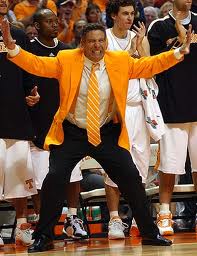
At the same time Bruce Pearl was finally fired by Tennessee after directly lying to his athletic director, President and the NCAA. Unlike Tressel who lied by omission, Pearl just lied outright, and then did it again. In a remarkable step the SEC (this tells how outlandish this was) stepped in and suspended him for eight league games after Tennessee slapped his hand. He was finally fired but only after his team did not go far enough in the NCAA tournament. Tressel of course will continue to coach.

Once upon a time in an NCAA long ago and far away, lying not just got you fired but not hired. Now teams regularly hire proven liars like Rick Neuheisel at UCLA or Kelvin Sampson at Indiana. So the world of the university where truth seeking is honored above all and lying remains a cardinal sin has made its peace with coaches who lie, coaches who win that is.

Thank God an athlete lied and actually got convicted! This reminds us that honesty and transparency lie at the foundation of sports; wish universities would remember that.

Wednesday, April 13, 2011

The Dark Heart of Fans: Review of The Big Fan


He was beaten senseless for the crime of wearing Giants’ gear at a Dodger game. Two men dressed in Dodger blue attacked, knocked him down, then kicked him and fled to a car where a woman and child waited for them. Bad movie? Scene from the Sopranos? No, this is first day reality of baseball fans run amuck.

The awful incident reminds us of how important and fragile being a good fan can be. Being a fan involves a form of identification with a team, place and history. It can prop up fragile identities in a brutally mobile society where geography, work and even profession provide more and more attenuated identities. When recession strips away any illusions we might have about organizations being loyal to us, the few anchors we have for identity become even more important.

I’ve written before about how being a fan involves special obligations as well as special influence on the game and community. This incident in Los Angeles reveals the dark side of anger and mutual recrimination and hatred that fandom can unleash just like the destruction of the sacred grove in Auburn or the organized hooligans in Europe.

American movies and culture seldom engage what it means to be a fan, and when they do it usually reduces them to caricatures like in the movie The Fan where a psychopath kidnaps his idol.To many of us, however, being a fan does not involve being either a psychopath nor a malformed loner, rather we share it with family and friends and weave it into the texture of our lives, history and time.

Another movie reminds me both of the pathos, warmth and darkness of being a fan. The Big Fan tells the story of Paul Aufiero played with quiet implosive power by Paton Oswalt. At 35 he lives at home with his mother (what else), sleeps with a blanket embossed with Giants logo and has a picture of his favorite player hanging on his bedroom wall. He works at a dead end job as a parking lot attendant. But the dead end job provides time for him to compose with care and pain the rants he will unleash on late night sport talk radio. He inscribes them, almost etches them, with ball point on paper. He devotes his hours, mind and passion to his beloved Giants. What sound like spontaneous rants are composed defenses of his team replete with play analysis and statistics.

His mother nags him to grow up and find a life, but the point of the movie is that Paul believes he has a good life. He is not going anywhere and does not have the skill, education or quality of mind to move up. He knows there is no upward mobility world for him and for these good reasons he does not have a lot of ambition to do so. I mean why bother to dream or strive for what you know is impossible in this society.

But he does have his beloved New York Giants. The team dominates his life. He and his best and only friend Sal  attend the Giants games. In this modern world, he, like most working class families, does not have the money to actually attend the game. But Paul and Sal proudly tailgate in the cold parking lost watching a scratchy TV hooked to his car battery. 

This is OK. Paul knows his presence there proves his deeper loyalty to the team than the rich comfortable fans inside or the wimps who sit at home and watch. He knows he is their best and most loyal fan. The proof reinforces a strong and secure identity as the Big Fan. His role and  identity are reinforced by his late night radio moniker,  “Paul from Staten Island." His rants roll out with statistic, plays, and a mad logic of their own and generate his own avid following among the 2AM insomniacs who follow the ruthless, raucous, braying rituals of sport talk radio vituperation. He duels with his despised talk radio rival, Philadelphia Phil, who defends the hated hated Philadelphia Eagles. 

It looks like Paul  has little in his life to be proud of, but Paul sees it differently. He invests and gets psychic and status rewards  with his relation to the team. He also possesses a lodestar for his emotions and a way to invest his limited but real emotions and wealth. Watching him put on war paint for the games portrays a ritual of identity and community. Paul knows who he is.

The movies unfolds when he and his sidekick accidentally spot the team’s star linebacker and follow him through what may be a drug buy, then to a strip club. They humbly approach the linebacker for an autograph. Through a sad and funny misunderstanding the linebacker beats Paul into unconsciousness.

Three days later he awakes in a hospital. The linebacker is suspended, the Giants tank and his brother in law wants to sue the linebacker and team. Torn to his core and mocked and scorned now that his real life is revealed, Paul remains as stubborn as a reporter protecting first amendment sources. He will not betray his allegiance to the team even though his “hero” lacerated him and his vision.  Now he is scorned.

The  key of all our community versus personal allegiances is that we are loyal to a dream and vision, not to a reality. Cities, states, teams remain corporate shells and cold institutions inhabited by rotating personnel and our faithfulness to them emerges from our experiences of them and their place in our life and history. These loyalties stem from deeper reasons demonstrated by how Colin Firth’s loyalty to his soccer team reflect his link to his father and their complicated history in Nick Hornby's Fever Pitch.

The Big Fan ends with an act of violence! To redeem himself and prove his loyalty to himself and his dream identity, Paul seeks out his mocking nemesis on talk radio, the defender of the Philadelphia Eagles.  The Big Fan draws a gun on Philadelphia Phil and for a moment we fear that he will redeem himself like Travis Bickle in Taxi Driver with an act of murder. But Paul shoots him with the paint colors of his Giants and makes redress for himself and his team.

Our Big Fan ends in jail. He has proven he loves his team more than himself, a core of human courage. The issue here is not whether the team deserves the love, but that he is capable of it. People have certainly devoted themselves to things more loony or more dangerous than a football team.  This love can pervert into jealous anger and hatred unleashing the violence in Los Angeles, but it can give life and a strange nobility to the life of a big fan. 

Wednesday, April 6, 2011

Deep Sport--the Upside of Brackets & Drafts

Well my species based brackets got shot up, but so did everyone else. On the other hand I and millions, yes millions of other human beings did spend hours thinking and working on brackets, most of which failed. But people will do the same thing next year. The only good thing about mine was that I was wrong about the Wildcats and the arch-fiend did not make it to the finals. But I want to think about the whole idea of people making up brackets and mock drafts and fantasy leagues.

It can look silly, really. People spending tens of millions of hours (yes that is right)  to fill out mock drafts for the NFL or devoting time, thought, effort and discussion to fill out their NCAA brackets or manage their fantasy teams. It can look grotesque when ESPN and assorted talk radios obsess endlessly and turn the exercises into media extravaganzas.

But something else is going on here. To an outsider or nonbeliever, like my wife who regards it all with a bemused tolerance and disdain, all this effort looks like an immense waste of time. But to me something interesting is happening here. Mock drafts, bracket making, fantasy leagues, following the Hot Stove league all force fans to think, to think hard about the structure and nature of the game and team they love.

I believe thinking is a good thing. I believe that thinking hard about something is an even better thing. It expands a person's imagination and knowledge base and stretches their appreciation of something, in this case sport. It makes people "students" of the game. As a teacher I might prefer people spend more time thinking about politics or the meaning of life, but I'll take an activity that induces millions of people to research, imagine and think about sports. My wife adds that it increases math skills (whoa! never thought of that) and to carry on despite a broken heart!

To construct an actual  bracket requires a person to know teams, but more importantly to know something about teams. Can a team A's  2/3 zone deal with team B's speed or fast break? Can a team's long limbed defense take away another team's quickness or outside shooting. To ask these questions and to think about them means a person must delve into the configuration of a game and what is required where different styles of play confront each other.

Constructing a mock draft requires a person to reflect carefully upon their team and other teams. A fan has to ask what kind of offense or defense they should develop and what is required of them to compete successfully against other teams. A mock draft demands that a fan dig into the needs of a team and the skill and character of possible players.

Creating and managing a fantasy team means a person has to think about the structure of the game. They have to determine what makes an offense or defense work and then match people to the approach they design. Jim Collins in Good to Great would call it learning to get the right people on the right seat in a bus.

Doing all this means a person has to research a lot of information from a lot of different sources. It may seem a waste of time, but it engages a person in  research, evaluation and inquiring into the nature of the game.

These exercises ask people to probe the core of the sport. What is the essence of the sport? At their core sports like nature possess an elegant simplicity. The simplicity is revealed in archetypical moments: a precise baseball double play; a sweep strung out by the defense that cuts for either a gain or stuff; a quick fake, cut, pass for a textbook back door play. Each case demonstrates the triumph of skill, knowledge and execution. The archetypes illustrate the deep core of that sport. Baseball: individuals acting in unique space coordinating actions in non-clock time time; football: extended planned force meeting planned reactive force to move in space; basketball: speed, misdirection, clearing space for high percentage actions.

Each sport has a center, a deep core structure that players and managers internalize. Good teams and players and coaches develop approaches, even philosophies of approaching the game. No one ever masters or exhausts the core of a sport. In this sense, playing or appreciating a sport is like approaching art, you can never exhaust its possibilities, and even within formal rules like in music or classical painting, a person expands boundaries, evinces new skills and creates new possibilities. The form, the art, the game evolves through the engagement of mind and talent and competition.

The deep reality of sport plays out in the play of the field but also the play of brackets, drafts and fantasy leagues.

Friday, April 1, 2011

The Interspecies Final Four Bracket

So!  My brackets did about as well as anyone else aside from an eight-year old bracket savant in Muskogee Oklahoma.

A Bulldog. Husky. Wildcat. And Ram. Who would have thunk?

For the elite eight I had a Jayhawks, wounded Eagle, a Husky, Cougar/Panther, Tiger, manly man, probably an Irish, Demon and Horse chestnut, no, I mean buckeye.

So we end up with two canines  (a good thing), one feline, and one Ram.
How does the interspecies final four play out?

Well here goes.

I think the Bulldog—Ram contest could really interesting. The Bulldog has to jump high, probably too high, and grab hold of the Ram’s neck and then wrestle it down. Now I have a lot of respect for bulldogs especially with their tenacious under bite, but this strikes me as a little too big a leap. On the other hand I figured out how the Rams got there. I mean, Rams, come on, I don’t even know what species they belong to!

So here is my theory. The Rams are not really Rams; they are demonic. Yep, that’s right. Think about it. Cloven hooves check. Curved horns check. Braying sounds check. So the Rams are not really Rams, they are demons and snuck in under sheep’s clothing as it were.

So the Ram/demons will win hands own in this one.

Now the Husky—Wildcat fight. Here is the mother of all interspecies fights, the archetype of them all cats versus dogs. The world is pretty deeply divided into Cat people and do people, and this battle defines it. I know because I married a cat person and live with cat children; it is very hard sometimes. The Huskies are noble, durable, courageous, loyal, strong, capable, smart and allies of humanity from its early days. They should win by virtue of intelligence, endurance, and nobility.

The Wildcats on the other hand are felines. They cannot be trusted, they cheat, they lie, they wait for people to die and then eat them. These wildcats have very long claws and no respect for rules that is how they win.

It is a sad commentary upon life as Machiavelli would tell you that often the noble good ones lose to the ignoble bloodthirsty cheaters. I fear this is what will happen here with those long claws, probably tipped in poison, I mean these are the Wildcats after all. So the Wildcats to the sorrow of anyone who cares about honor is sports will win.

Now the finals: Rams versus Wildcats. Well it should be no contest here. The Cheating, ignoble, poisoned clawed wildcats should win hands down. But, if I am right and the Rams really are demonic, then look for the overconfident Wildcats to get kicked where it counts and then gored.

So here it is: the Demons in sheep’s clothing, the Rams win.

Monday, March 28, 2011

How Colleges Treat Fired Coaches

End of the regular season and the coaching blood bath begins. 32 down, probably 40 total. And that only includes the men's basketball coaches. Already the bodies are being filled with new bodies.  Ever wonder what happens to fired coaches and what it does to Intercollegiate athletics?

One day your name headlines the neon signs on the football stadium. One day the media follows your every move and recruit. One day you are part of the face of the college and embody the values that university wants to project through sports.

One day in a closed meeting where remarkably little information is exchanged you are offered the chance to resign or just fired. The person who fires you assumes you know why and a bland announcements says "we decided to go in a different direction and thank coach X for his or her dedicated service to the university. We wish them well in their future endeavors."

The next day the ex-coach's name has disappeared from the web site and all the advertising of the university. All the speaking engagements where the coach would extoll the university are cancelled. All the recruits are hastily called by the sport administrator or AD or even the President depending on how important they are. During the night, movers surreptitiously come in and box books, trophies and pictures of you and boosters and players. Could be 3 years of stuff or 20 years of stuff, the same drill. No party, no farewell, barely a chance to say goodbye to friends. You are GONE. Actually you are not just gone, it goes deeper.

The ex-coach now becomes a nonperson, not a persona non grata, but literally a non-person like in Orwell's 1984. If you look, the terminated coach no longer exists in the athletic department web or marketing. The office name plates disappear. You can see the shadowed space where the plates used to be while everyone waits for a new coach. Maybe a lonely bus sign with the ex-coach's name or face still wanders the city streets. The empty spot on the portrait wall has been filled by moving all other coaches' pictures around.

Welcome to the end of an intercollegiate coach's job.

This is how the modern university treats their coaches. The do not fire them so much as erase them. Years, service, loyalty, exemplary conduct, none of it matters when the AD and boosters, and in big revenue sports, the President, huddle and decide.

This scenario should imprint on us why coaches sometimes  have trouble taking all the ideals and defense of intercollegiate athletes seriously. They know better. They may be men and women deeply committed to  helping the student grow as humans and excel as athletes.        BUT if a coach does not win,  graduation rates, the quality of humanity of their athletes, their public service matter nothing. If a coach ticks off boosters, character does not matter. As a matter of fact, as long as coaches are winning, most of the time character does not matter either.

I have seen this too many times now. Men and women I respect leaving in the night and not even able or willing to come back to the campus they served. With luck, their true friends will hold a party for them.

Most coaches have experienced this once, and they know that the boosters are not their friends; lord help a coach who believes a booster is a friend, just wait until they start to lose. Coaches live in a looking glass world  where everyone lionizes you and the university markets you, but discards you like a failed toothpaste brand.

The end of one coach marks the beginning of another. Another cycle launches. If we wonder why coaches' leave for other jobs, if we wonder about that attenuated loyalty of coaches or players, if we wonder why good coaches may be tempted to cheat, go no farther than the end of the job. The colleges created this, not the coaches.

"Once I was somebody."

Wednesday, March 23, 2011

Sacred Groves and Unholy Rivalry

I often extol how athletic competition and team loyalty provides a reference point for individual and community identity in the United States.The rabid and wondrous outpouring of interest at March Madness illustrates how deep and wide this can be.  For a country of immense mobility and strained family, local and work loyalties, these ties of loyalty and identity to our teams helps anchor selfhood and keep us whole as we traverse the fractured landscape of our country.

This identification with teams has many upsides, but a dark side always lurks. We are mortals, and we can turn any good into bad. The ugly vandalism of the Auburn tree grove three weeks ago reminds us of that. Some adults, not kids performing pranks, murdered the trees and we can only guess why. On the phone the alleged perpetrator said, "roll Tide, roll." 

I have never been to Auburn but lived on several campuses that had sacred trees and groves. These tree created places of haven are a remnant of the Greek origins of our universities. These groves provide places of respite and peace and reflection. Many of us remember moments of joy, refuge or even love and insight in those groves. They provide a locus of identity for the community.

The groves may be a place to celebrate victories, but more deeply, they celebrate the world of university. Living, growing trees carve out a space that commemorate the world of the minds and relations and the emotions we cultivate there.

So the wanton destruction in the name of sports rivalry should horrify all of us who value the communal aspects of sports.

I spend way too much time around grown adults, successful strong people, who find their lives rent by anger and depression or pure joy depending upon weekly fate of their college teams--no these are not the senior administrators or coaches, these are the boosters.

Too many of us live out our own lives through our teams rather than seeing them as aspects of our individuality who bring us joy and sadness in a community with others.

In college sports we talk about “rivalry games.” Most often we mean the intra-state games between the major universities. At Michigan we all loved the UM—MSU rivalry. Here at Washington, the UW--WSU  rivalry brings spice and week long frenetic activity before each game. The rivalries are both good-natured and intense. Oddly enough  many of the athletes are from out of state and don’t quite understand the intensity of the fans until they experience the games. The games provide bragging rights and lots of other social aspects before and after. Our neighbors to the south in Oregon call their rivalry “the civil war.”

The civil war metaphor taps something truer and more dangerous here; this illuminates the Auburn destruction. I have lived at schools where lots of pranks and stolen symbols or painted symbols surround the rivalry week. They are usually “pranks” and even the vandalism or theft of symbols is not permanent. But this destruction of living things strikes deeper. An abiding rival of Auburn, Mississippi State expressed its condolences given its own grove that served as a place of contact, celebration and party.

This speaks to a rivalry that has degenerated into hatred. I think of blood rivals. Children are born into schools. Kids can find themselves in trouble with their family and relatives if they go to the hated rival school. As in Alabama, the blood rivals may reflect class or geographic or status resentments. But the blood rivals linger deeper and meaner. Often the teams find themselves both confused by and caught up in the rivalries.

I think the moral worth of sports is desecrated when it inspires and reinforces this type of mean resentment. I remember Damn Yankees where a man sells his soul to help his beloved Red Sox beat the Yankees. I respect and admire sport, but it is not worth or worthy of selling your soul or destroying the sacred. 

Monday, March 21, 2011

End of a Season


It just ends. The clock ticking, thousands of fans stand and yell and scream. Everything hurries up compressing six months into .5 seconds. Then, it’s over. Just like that.

Reality rips apart, and the flow that consumed the lives of players and coaches for six months ends. One teams shouts in jubilation and relief, the other walks off heads hanging, towels over their heads, even though they have not reason for either, they just walk off the floor for the very very last time, together.

The season had ground on forever. It started with immense expectations, conference championships and deep runs into the NCAA tournament beckoned. A trip to Maui launched the campaign.

The season ground on. A long long season. A few early losses to good teams, a few beautiful victories. A top twenty appearance. Then a horrid midseason swoon, the team had visited this before. The media turned on the guys, the media forgot about the team, the boosters grumbled and struggled to make sense of all the talent laying waste.

No one believed in them but they themselves. Dreams died quickly and loudly in some bad losses. People tried to not to care or just felt confused as the team blew games and jumped from brilliant to disorganized and lost inside the same game and the same season.

But the loss of dreams gave birth to another slight hope. No one even mentioned it except the team to themselves. A tournament fun, a tournament championship based on a couple grind victories and a brilliant fun game of pure basketball decided at the last second.

Beneath the season the physical and mental attrition never let up. An early torn ACL of the starting point guard, but no one complained and the shooting guard grew into a leader and point guard. Three concussions threw off development of players and hurt the team and its evolution. Then a shadow of an investigation and lingering prosecutors darkened the team’s accomplishments and weighed on everyone all the time.

Guys grew up right before our eyes. Attrition and scrutiny could have broken them and certainly hurt, but a new dream grew from a dead dream.

Then off to the big dance, the team flew on a charter to the NCAA tournament. 2800 miles from home, the farthest any team had to travel. They took exams, studied and played.

The end always feels just too harsh, too sudden. It was a hard hard game. Good moments both teams playing college ball with runs and mistakes and amazement all woven together. Uneven foul rations but the game remained in their grasp. One missed inbound pass, the game, the season, the awful quiet of what might have been.

No one knows quite what to say. Anything you can say sounds like a cliché, until you realize that in context a lot of clichés are true.

The bus ride back is quiet and somber. Somber as in funeral, not quiet and focused like heading for a game. Everyone knows, and no one can articulate it that walking off the court was the last time this group will ever play together for high stakes. The last time this group will rely upon each other and share the trust and know the pain of loss and the jubilation and sometimes relief of victory. Three will go their way, but it is all too hard to think about. It just hurts.

At the hotel the room everyone ate in and planned and did scout is cleared out, no buffet line. The round tables and huddled screen area replaced by neat soldierly chair lines for the AFCO TECH sales meeting. No sign of the team. The TVs still play the next games with announcers abuzz with runs, and sterling plays and heartbreaking 19-year-old mistakes, but it's all background now to lost possibility, to lost probability.

The guys will recover some. Later they will celebrate at the banquet and remember the crazy roller coaster triumphant year, but right now it is too silent, too abrupt and the plane is going the wrong direction.